What is a CRM? A Plain-English Explanation for Hardin County Business Owners (2026)
A CRM (customer relationship management system) is a single inbox for every customer touch, calls, texts, emails, web form fills, reviews. Horizon Business Hub sets one up for Hardin County businesses in about an hour using GoHighLevel under our managed Quick Fix tier. Most owners spend under $300 per month and get back roughly 8 hours per week of manual chasing.
What is a CRM in one sentence?
A CRM is a tool that records every conversation you have with every customer (calls, texts, emails, form fills, quotes, reviews) so nothing falls through the cracks and your follow-up runs automatically.
If your business is in Elizabethtown KY or Radcliff KY and you have ever forgotten to call a customer back, lost a quote in a text-message thread, or wondered where a referral came from, that is the gap a CRM closes. The acronym stands for customer relationship management. The name is older than the modern tool. What you are really buying in 2026 is an inbox that talks back.
Why do most Hardin County business owners need one?
Because the leak is rarely in the work, it is in the follow-up. Three patterns repeat in almost every small business audit we run across Hardin County:
- 23 to 31 percent of inbound calls go to voicemail and never get called back the same day
- 40 to 60 percent of quotes sent never get a follow-up touch after the initial send
- 90 percent of completed jobs never trigger a review request
A spreadsheet of customer names will not fix any of those. A CRM with automated triggers will. The 2024 Salesforce Small and Medium Business Trends Report found that businesses using a CRM grew revenue 29 percent faster than businesses using spreadsheets or memory.
What does a CRM actually do day-to-day?
The clearest way to see what a CRM does is to walk through one day in a Hardin County contractor's workflow with and without one.
| Customer event | Without a CRM | With a CRM |
|---|---|---|
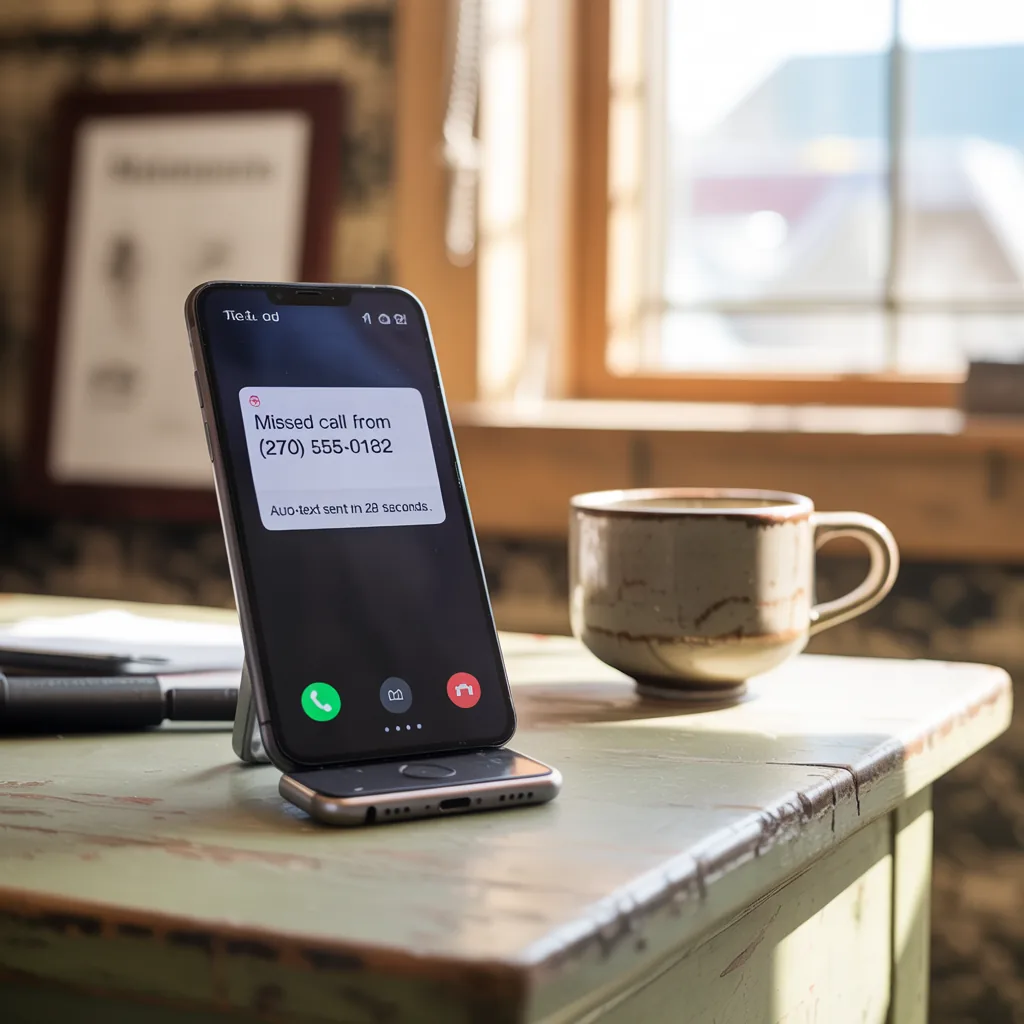
| Customer calls, you are on a job | Voicemail. You forget to call back. Customer hires a competitor. | Auto-text fires in 30 seconds: "Sorry we missed you, reply with your zip and the issue." |
| Customer fills out web form | Email lands in your inbox at 7pm. You see it at 10am the next day. | Text fires to your cell in under 60 seconds. You text back in 5 minutes. |
| You send a quote | The quote sits in a sent-folder. You forget to follow up after 3 days. | [Automated quote follow-up](/services/quote-follow-up) touches at day 1, 3, 7, 14 with prebuilt text. |
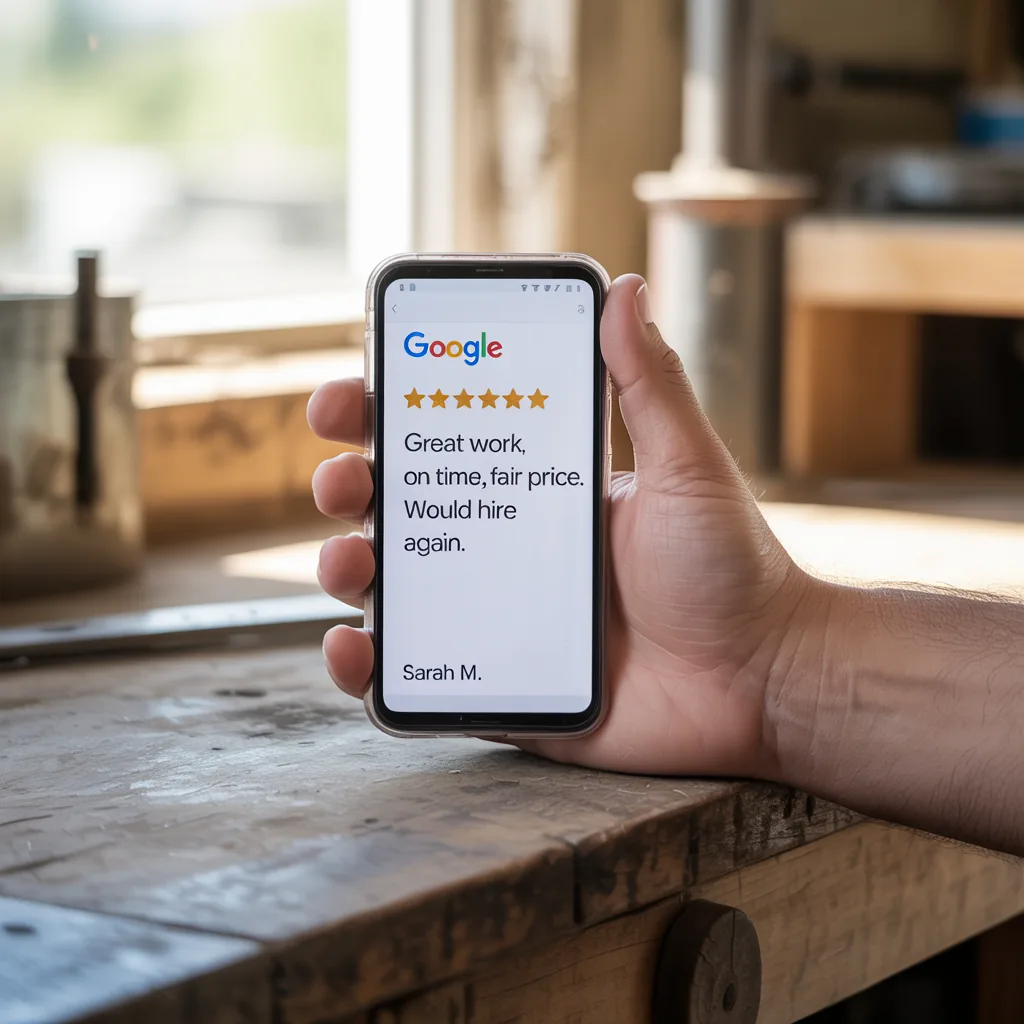
| You finish a job | You meant to ask for a review. You forgot. Customer never leaves one. | Review request fires 24 hours after job close with a direct Google review link. |
| Referral comes in | You have no idea who referred them. | The CRM tags the source so you know to thank the referrer. |
That is the entire pitch. Five automations, run by software, that recover revenue you are already earning but losing in the gap between when something happens and when you remember to act on it.
How much does a CRM cost in 2026?
Direct software cost for a small business CRM runs $30 to $300 per month depending on features and seats. Three reference points for Hardin County small business owners:
- HubSpot Starter: $20 per seat per month. Strong free tier. Pricing reference.
- Jobber: $69 to $349 per month for trades. Field-service focused. Pricing reference.
- GoHighLevel: $97 to $497 per month for the platform itself. What Horizon Business Hub uses under the hood for managed clients.
The hidden cost is setup time. A do-it-yourself CRM setup takes 8 to 40 hours of an owner's time to configure correctly, build the automations, and migrate existing customer data. Most owners we audit start with software, fail to finish setup inside two weeks, and the CRM becomes a more expensive version of their spreadsheet.
What is the smallest possible CRM setup that actually works?
For a Hardin County business with under 100 active customers, the minimum viable CRM has exactly five automations. Anything more is optimization. Anything less is a contact list.
- Missed-call text-back. Auto-text every unanswered call within 30 seconds. Full breakdown of how this workflow runs.
- 5-minute lead response. Auto-text on every web form fill, with a booking link.
- Quote follow-up sequence. Day 1, 3, 7, 14 prebuilt text touches.
- Review request automation. SMS 24 hours after job close with Google review link.
- One inbox to reply from. Texts, emails, Facebook messages, web chat, all in one place. How review automation feeds into the same inbox.
Those five take less than an hour to configure with the right platform. They recover the bulk of the revenue most owners are losing.
What does the research actually say about CRM ROI for small businesses?
The numbers behind CRM adoption are documented across multiple independent surveys. Three sources are worth reading in full if you want to verify the ROI claim before committing.
Salesforce State of Sales (2024). The Salesforce State of Sales report tracks adoption and outcomes across 7,700+ sales professionals. Small businesses using a CRM reported 29% faster revenue growth than peers using spreadsheets or manual tracking.
HubSpot State of Marketing (2024). HubSpot's annual state-of-marketing research documents conversion lift from automated follow-up: businesses responding to leads within 5 minutes are 9x more likely to convert than those responding within 30 minutes.
InsideSales response-time research. The widely-cited Lead Connect five-minute rule research tracks lead conversion by response time. The conversion-rate cliff between 5 minutes and 30 minutes is roughly 80%. Beyond 60 minutes, conversion rates flatten near zero.
For Hardin County small businesses, the math is concrete. A Hardin County HVAC company doing 80 service calls per month at an average ticket of $260 generates $20,800 monthly revenue. If 23% of inbound calls go to voicemail and 67% of those never get called back same-day (the typical pattern we audit), the missed revenue floor is roughly $2,400 per month, enough to pay for a CRM 8 times over.
The BLS Business Employment Dynamics data shows roughly half of US small businesses fail within 5 years. The crash year is typically year 3, when manual processes break under volume. A CRM installed in year 1-2 is preventative infrastructure for the year-3 crash.
What are the most common mistakes when buying a CRM?
Four mistakes show up in every CRM project audit:
- Buying before scoping. Owners sign up for HubSpot or Salesforce because the demo looked good, then never finish the setup. Outcome: $200 to $400 per month for a glorified address book.
- Importing every contact at once. The CRM gets clogged with dead leads from 2019 and the active customers get lost. Start with active customers only, add the rest later.
- Trying to track every metric. The five automations above produce 80 percent of the revenue lift. Everything beyond them is optimization. Skip the analytics dashboards until the basics work.
- Setting it up but never connecting the phone. Missed-call text-back is the highest-ROI feature. Owners commonly skip it because connecting the business line to the CRM looks intimidating. It takes 15 minutes.
When should I hire someone to run my CRM instead of doing it myself?
If you can answer yes to any of these, the do-it-yourself math stops working.
You bill more than $75 per hour in your trade. Forty hours of CRM setup is $3,000 of your billable time. A done-for-you setup costs less than that and ships in days, not weeks.
You have already tried to set up a CRM twice and got bogged down both times. The pattern is the issue, not the software. Our Quick Fix tier handles the setup, configures all five core automations, runs the platform monthly, and includes the missed-call text-back, lead response, quote follow-up, and review automation workflows. $297 setup plus $297 per month, month-to-month.
You run a Hardin County business doing $500K or more in revenue. At that size the missed-revenue cost of an unconfigured CRM is bigger than the cost of full operations management. Look at Local Business Core or Contractor Core instead.
What other questions do Hardin County small business owners ask about CRMs?
Five edge cases answered in the structured FAQ section above: one-sentence definition, low-volume use case, real costs in Elizabethtown, CRM vs spreadsheet, phone-contact-list myth.
About the author

Justin Fernandez owns Horizon Business Hub (digital infrastructure for SMBs), Horizon Pack and Ship (two-location retail shipping in Radcliff and Elizabethtown), and Horizon Print Shop. He architects the agency stack from inside an actively-running multi-unit operation, not from a consulting chair. The goal is simple: bring enterprise-grade support to everyday businesses. What owners actually need, not what sounds impressive in a deck.
Read full bio →